All you need to know about Continuous Glucose Monitors (CGMs)
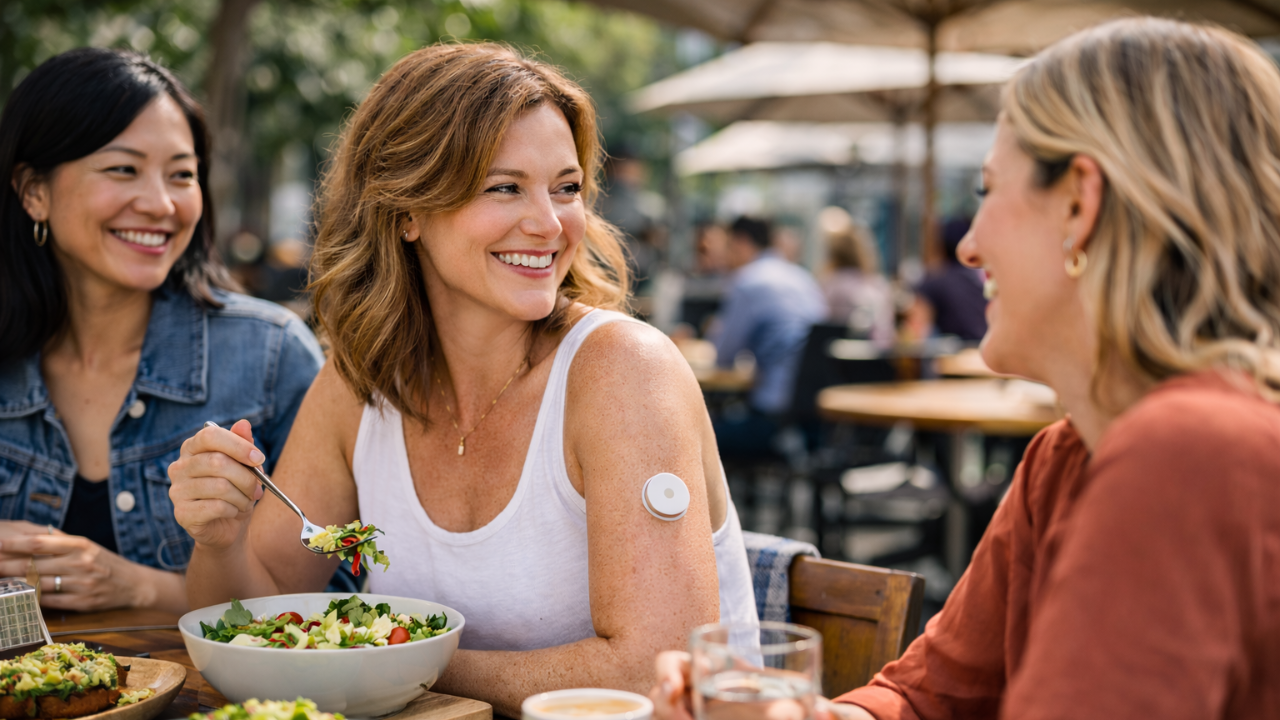
Continuous Glucose Monitors (CGMs)- A practical guide for patients
Many of my patients genuinely love wearing a CGM. They often tell me it’s one of the most eye-opening things they’ve done for their health.
It’s a great example of personalised medicine — because I’m continually surprised by how two women can eat the same foods and have very different glucose responses. There is no single “perfect” diet that suits everyone, and CGMs help us see what your body responds best to.
What is a Continuous Glucose Monitor?
A Continuous Glucose Monitor (CGM) is a small wearable device that tracks glucose levels continuously throughout the day and night.
A tiny sensor sits just under the skin (usually on the back of the upper arm) and measures glucose in the fluid between your cells. This closely reflects blood glucose levels, with a short time delay. The sensor sends readings wirelessly to a smartphone app, allowing you to see how your glucose responds to food, movement, sleep, stress, and everyday life.
Most sensors are worn for 10–15 days, then replaced.
How does a CGM work?
-
The sensor measures glucose every few minutes
-
Readings are displayed as a graph over time, not just single numbers
-
You can see patterns and trends, rather than relying on one-off tests
-
Data helps connect what you do with how your body responds
CGMs were originally designed for people with diabetes, but are increasingly used by people without diabetes as an educational tool to better understand metabolic health.
Who might consider using a CGM?
CGMs can be helpful if you:
-
Have prediabetes, insulin resistance, or gestational diabetes
-
Have a strong family history of type 2 diabetes
-
Experience fatigue, energy crashes, cravings, or brain fog
-
Want to understand how different foods affect your body
-
Are navigating perimenopause or menopause, where glucose regulation can change
-
Are working on metabolic health, weight regulation, or performance
Used well, a CGM is a learning tool, not a judgement or a test.
Who may not benefit (or should use with care)?
CGMs may not be appropriate if you:
-
Have a history of disordered eating
-
Find health data anxiety-provoking or overwhelming
-
Feel tempted to chase “perfect” numbers
-
Are looking for a diagnostic test rather than insight
CGMs are not a substitute for medical care. If you have diabetes, are pregnant, on medication or experience symptoms such as dizziness or fainting, CGM use should be discussed in a clinical setting.
How do you apply a CGM?
-
Clean the skin on the back of the upper arm
-
Apply the sensor using the provided applicator (quick and usually painless)
-
Pair the sensor with the smartphone app
-
Wear continuously during normal daily life, including sleep and exercise
-
Avoid prolonged pressure directly on the sensor (e.g. sleeping directly on it)
Most sensors are water-resistant and safe for showering and exercise.
Some of the CGM options available in New Zealand
Availability and pricing may vary. Additional shipping or handling costs may apply. Costs are estimates.
Abbott FreeStyle Libre 2 Plus
-
Sensor cost: approx NZ $99.46 + GST per sensor
-
Reader device optional (not required for most modern smartphones)
Pros
-
Simple and easy to use
-
Reliable and well-validated
-
Excellent option for first-time CGM users
Cons
-
App offers limited interpretation support on its own
Dexcom ONE+
-
Single sensor: approx NZ $78.20 per sensor (tax included)
-
Monthly packs may also be available
-
Automatic continuous readings
Pros
-
Very accurate
-
Continuous real-time data
Cons
-
App and setup can feel more complex
-
More data than some people want initially
LinX
-
Sensor cost: approx NZ $75.00 per 15-day sensor
Pros
-
Smaller and discreet
-
Lower cost
-
Suitable for short-term learning
Cons
-
Can occasionally read lower than expected
Vively
-
Uses the FreeStyle Libre 2 Plus sensor
-
Combines CGM data with additional education and interpretation support
- Costs around $229
Pros
-
Extra help interpreting glucose data
-
Educational insights and AI-driven feedback
-
Access to structured guidance and dietitian input
-
Well-suited for people who want to go deeper
Cons
-
Higher overall cost due to subscription
How to use your CGM: a simple 15-day approach
You don’t need to change everything at once. Many people find it helpful to break their CGM wear into phases:
Days 1–5: Eat as you normally would
-
Don’t try to “be good”
-
This gives you a true baseline
-
Notice patterns rather than individual spikes
Days 6–10: Test things out
-
Try foods you eat occasionally
-
Notice which meals spike you more or less than expected
-
This phase is about curiosity, not restriction
Days 11–15: Gently try a few strategies
You do not need to do all of these. Pick one or two to experiment with and see how your body responds.
Helpful strategies to try:
-
Move after meals: even a 10–15 minute walk can reduce the size of a glucose spike
-
Dress your carbs: combine carbohydrates with protein, fat, and fibre to slow glucose absorption
-
Food order: eating protein and vegetables before carbohydrates can reduce glucose spikes
-
Vinegar: a small amount of vinegar before or with meals may help blunt post-meal glucose rises
-
Swap refined carbs: choose whole foods (e.g. whole grains, legumes, vegetables) instead of refined carbohydrates
-
Prioritise breakfast: a lower-sugar, higher-protein and fat breakfast often leads to steadier glucose for the rest of the day
These are experiments — not rules.
Wearing a CGM for longer
Many people choose to wear a second CGM for another two weeks once they’ve finished the first.
Often, the first 14 days are spent simply learning how the system works. A second sensor can allow you to:
-
Apply what you’ve learned more confidently
-
Explore patterns more deeply
-
Make changes without feeling rushed
How to interpret your CGM data (starter guide)
The goal of a CGM is not perfectly flat glucose. Healthy bodies naturally rise and fall. What matters most is patterns over time.
Focus on trends, not single numbers
-
One spike does not mean something is “wrong”
-
Look for repeated patterns across days
-
Zoom out rather than focusing on individual moments
Glucose rises after eating are normal
-
Glucose typically rises after meals
-
Large or fast spikes followed by sharp drops may suggest the meal was harder for your body to process
-
Slower, steadier rises that return toward baseline are generally easier on the system
Time in range
-
Many apps show how long glucose stays within a target range
-
Spending more time in range usually reflects steadier glucose regulation
-
Small fluctuations are expected and normal
Steep vs steady responses
-
Steep spikes are more common with refined carbohydrates eaten alone
-
Meals containing protein, fibre, fat, and slower-digesting carbohydrates often produce steadier curves
Overnight patterns
-
Slightly lower glucose overnight is normal
-
Overnight “roller-coasters” can sometimes follow very large evening meals
-
Pressure on the sensor while sleeping can affect readings
Exercise, stress, and mornings
-
Intense exercise can temporarily raise glucose — this is normal
-
Stress can raise glucose even without food
-
A small rise on waking is common due to natural hormone release
What not to do
-
Don’t chase perfect numbers
-
Don’t cut out foods based on a single reading
-
Don’t assume symptoms always equal glucose problems
If anything concerns you, it’s important to discuss it in context.
Reviewing your CGM results together
After completing your CGM wear, most apps allow you to download a summary report.
If you wish, you can:
-
Download your CGM report
-
Book a consultation where we can review the results together, place them in clinical context, and discuss practical next steps (for people living in New Zealand only).
This allows the data to be interpreted alongside:
-
Your symptoms
-
Your health history
-
Hormonal stage (including perimenopause or menopause)
-
Lifestyle factors such as sleep, stress, nutrition, and movement
Where to learn more
-
Glucose Goddess – https://www.glucosegoddess.com/
Clear, accessible explanations of glucose patterns and lifestyle strategies. -
The Healthstyle Doctor – Insulin Resistance article
Check out my article on why sugar and insulin resistance matter here
A deeper dive into what insulin resistance is, how it develops, and why interpretation is nuanced. -
Education and insights within your CGM app itself.
Responsibility & disclaimer
-
Any CGM ordered directly by you that malfunctions or is faulty must be managed with the supplier or retailer it was purchased from.
-
Warranty claims and technical issues are not the responsibility of The Healthstyle Doctor clinic.
-
If you are a patient of mine I can provide a letter of support confirming that you are not diabetic and are using a CGM for metabolic health education if required.
A final note
CGMs offer insight, not judgment. Used thoughtfully, they can help you understand your body more clearly and support sustainable, long-term health choices. I absolutely love wearing one, and have gained so many insights into my health!
Dr Taisia Cech
Want my best free resources
Pop your name in and I will send you to my VIP resource page- more great gut tips included.
We hate SPAM. We will never sell your information, for any reason.